

Finding Your Voice: The Courage to Be All of You
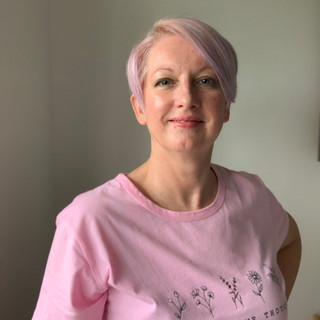
Your authentic voice doesn’t need to sound like everyone else’s - and neither does your business.

Have you ever found yourself wondering, “Who am I actually?”
Not who you’re supposed to be.
Not who other people think you should be.
Not who you think you need to become to be successful.
But who you actually are.
I’ve spent a lot of my life trying to answer that question.
I grew up surrounded by strong-willed people - the sort of people who were very certain about how the world worked and how other people should behave within it. Sometimes that certainty was expressed loudly and aggressively. Other times, it was much more subtle:
expectations, criticism, passive-aggressive behaviour or the unspoken message that if I wanted to be accepted, I needed to change.
The “this is just what you do” rules.
The invisible expectations about what a successful life should look like, what we should be interested in, how we should behave, what we should achieve and even what we should want.
Somewhere along the way, I became pretty good at adapting.
The problem was that the shoe never really fit.
It pinched in all the wrong places, was uncomfortable to walk in and, quite frankly, was probably the wrong colour too.
For a long time, I assumed the problem was me.
Perhaps I needed to change something about myself so I could finally fit in.
What if you don’t need to fit in?
One of the most radical ideas I have encountered through my personal development journey is surprisingly simple:
It’s okay to be me.
It’s okay to like the things I like, even when nobody else does.
It’s okay to be interested in things other people don’t understand.
It’s okay to pursue a path that doesn’t make sense to everyone else.
It’s okay to have dreams that look different from the ones other people have.
And yes, it’s even okay to be planning for my future when other people my age might be thinking about retirement.
I’m still learning this.
That’s important.
Finding your voice isn’t something you necessarily wake up one morning having completely figured out.
Sometimes it’s a slow process of noticing.
I actually like this.
I don’t like that.
This feels like me.
That feels like something I’m doing because I think I should.
It’s curiosity.
It’s trying something and discovering that you love it - or discovering that you absolutely do not.
And both are useful.
Because every time we learn something about ourselves, we get a little closer to knowing what our own voice sounds like.
Your voice is more than the words you speak.
When we talk about finding our voice, we often think about the literal voice we use to communicate.
And our physical voice is an incredibly intimate part of our identity.
There are things about it we simply can’t change very easily. It can reveal our age, where we grew up, our gender and even aspects of our personality. Our tone and the way we speak can communicate things we may not consciously realise we’re communicating.
Which is one reason criticism about our voice can feel so personal.
But our voice is bigger than the sound that comes out of our mouths.
Our voice is also how we express who we are.
It shows up in the things we create.
The ideas we share.
The causes we care about.
The way we communicate.
The choices we make.
And, for those of us running a business, it shows up in our brand.
Your business has a voice too
This is where I think finding your voice becomes particularly interesting for business owners.
Because when you create something in Canva, you’re doing much more than making something look pretty.
Whether you’re creating an ebook, workbook, social media post, presentation, flyer, business card, piece of merchandise or marketing material, you are making choices about how you want your business to be perceived.
Your brand has a voice.
It can be bold or gentle.
Playful or serious.
Minimal or expressive.
Professional or conversational.
Traditional or unconventional.
And there is no single “right” answer.
Your colours, fonts, imagery, layouts and words all contribute to that voice.
Think about the difference between a business that uses soft colours, flowing typography and beautiful lifestyle photography and one that uses bold colours, chunky fonts and energetic graphics.
Both can be professional.
Both can be successful.
But they are speaking very different visual languages.
And that’s the point.
Your business doesn’t need to sound like everyone else’s.
Stop trying to make your brand fit someone else’s mould
One of the traps I see - and one I have experienced myself - is looking at what everyone else is doing and assuming we should be doing it too.
We see someone else’s beautiful Instagram feed and think:
Maybe my business should look like that.
We see someone else’s website and think:
Maybe I need to communicate like them.
We hear someone else’s marketing strategy and think:
Maybe that’s what successful businesses are supposed to do.
And suddenly, without even realising it, we’re trying to squeeze our business into someone else’s shoe.
But just because something works beautifully for somebody else doesn’t mean it belongs to you.
This is where Canva can be both incredibly useful and surprisingly dangerous!
Because Canva gives us so many options.
Thousands of templates.
Fonts.
Colours.
Graphics.
Photos.
Layouts.
Trends.
It’s very easy to create something that looks fantastic - but doesn’t actually feel like you.
The goal isn’t to find the prettiest template.
The goal is to find - or create - something that communicates your message, your personality and your values.
Sometimes that means starting with a template and changing almost everything.
Sometimes it means experimenting with colours until something clicks.
Sometimes it means discovering that the font you thought you loved actually makes your brand feel completely wrong.
And sometimes it means breaking a few of the “rules” because the rule doesn’t suit you.
Not everyone will like your voice - and that’s okay
There is another uncomfortable part of finding your voice.
Once you start expressing yourself authentically, you discover something that can be difficult to accept:
Not everyone is going to like it.
Not everyone will understand you.
Not everyone will agree with you.
Not everyone will connect with your message.
And some people may even reject what you have to say.
For someone who is sensitive to rejection, this can be particularly challenging.
It can be very easy to turn someone’s response into a judgement about ourselves:
They don’t like this, so I must have got it wrong.
They disagreed with me, so maybe I don’t know what I’m talking about.
They didn’t choose me, so perhaps I’m not good enough.
But rejection doesn’t necessarily mean any of those things.
Sometimes it simply means we weren’t the right fit.
And perhaps that’s not rejection at all.
Perhaps it’s redirection.
The right people don’t need you to become someone else before they can connect with you.
Finding your voice takes courage - but it doesn’t have to happen quickly
I think we sometimes make authenticity sound like a grand declaration:
“This is who I am, and I don’t care what anyone thinks!”
Honestly?
That isn’t where I am.
And perhaps you aren’t there either.
Finding your voice can be much quieter than that.
It can look like giving yourself permission to try something new.
It can look like changing your colours because the old ones don’t feel right anymore.
It can mean writing a social media post in your natural voice instead of trying to sound “professional”.
It can mean creating an ebook that feels warm and personal instead of following every design trend.
It can mean saying, “Actually, this is what I think,” even when you’re not completely sure how others will respond.
And sometimes it simply means noticing the moments when you’re trying to be someone you’re not.
Slow is okay.
You don’t have to reinvent yourself - or your brand - overnight.
Instead, try approaching the process with three things:
Curiosity
Give yourself permission to experiment.
Try the colour.
Change the font.
Write the post differently.
Create something just because you want to see what happens.
You don’t have to know whether something is “right” before you try it.
Consistency
Finding your voice happens through repetition.
The more you create, communicate and experiment, the easier it becomes to recognise what feels like you.
You don’t need to be perfectly consistent.
You just need to keep showing up.
Compassion
This one might be the most important.
If you’ve spent years adapting yourself to other people’s expectations, learning to trust your own voice may feel uncomfortable.
Be patient with yourself.
You are learning something new.
And you don’t have to criticise yourself for not having figured it out sooner.
Your voice is worth finding
I used to think I needed to change myself so I could finally fit into the world around me.
Now I’m learning that perhaps the goal was never to fit.
Perhaps the goal was to discover what happens when I stop trying to squeeze myself into someone else’s shape.
And I think the same is true in business.
Your Canva designs don’t need to look like everyone else’s.
Your social media doesn’t need to sound like everyone else’s.
Your ebook doesn’t need to follow somebody else’s formula.
Your brand doesn’t need to appeal to everybody.
It needs to connect with your people.
The people who understand your message.
The people who value what you offer.
The people who resonate with the way you see the world.
Finding your voice isn’t about becoming louder.
It’s about becoming more you.
And perhaps that’s the real creative work.
Not creating something that looks perfect.
Not creating something everyone will like.
But creating something that feels true.
Because when you stop trying to sound like everyone else, you finally give the right people a chance to hear you.
And that is where genuine connection begins.

So, what would your business look and sound like if you gave yourself permission to let more of YOU into it?


Comments